
Dental Implants: Is Price the Most Important Factor?

Blog:Dental Implants: Is Price the Most Important Factor?
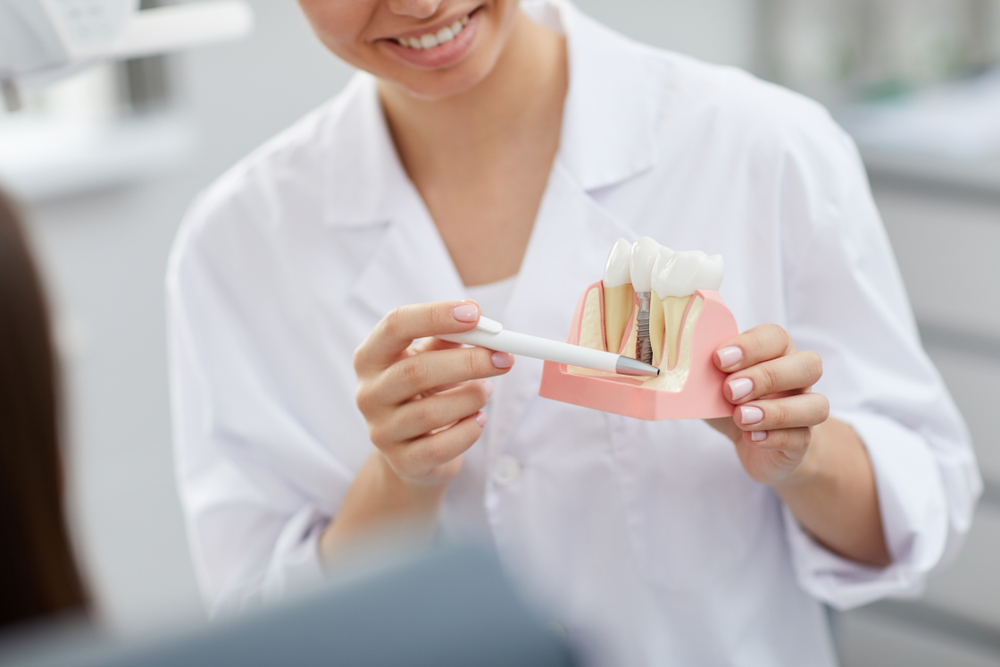
What to Consider When Choosing the Right Dentist for Your Implant Treatment
When you start researching dental implants, the first question that usually comes to mind is:
“How much does an implant cost?”
That is a completely reasonable question. Dental implants can be a significant investment, and comparing treatment costs is an important part of making an informed decision.
However, price is only one part of the decision.
An implant is not simply a product that you purchase and have placed.
It is a comprehensive treatment that involves diagnosis, surgical planning, implant placement, restoration, and long-term maintenance.
So before choosing a dentist based primarily on price, it is worth asking a few more important questions:
Who will place the implant?
How much implant experience does the dentist have?
Who will restore the implant?
What happens if something goes wrong?
And who will continue to take care of it years from now?
🦷 An Implant Is More Than Just the Implant
A dental implant treatment typically involves several stages:
Diagnosis → Treatment Planning → Implant Placement → Healing → Restoration with Abutment and Implant Crown → Long-Term Maintenance
Each step can affect the final result.
Before placing an implant, your dentist should evaluate more than just the missing tooth.
The condition of the surrounding teeth, gums, bone, bite, and overall oral health can all influence the treatment plan.
For some patients, additional procedures such as bone grafting or periodontal treatment may be necessary before an implant can be placed.
And once the implant is restored, the treatment does not necessarily end there.
Just like natural teeth, dental implants require regular professional care and good home hygiene. Problems such as inflammation around an implant, bone loss, loose components, or damage to the implant crown can occur over time.
That is why choosing the right dentist is about more than finding the lowest price.
💰 Should You Choose the Cheapest Implant?
Not necessarily.
That does not mean that an inexpensive implant is automatically a bad implant, or that a more expensive treatment is automatically better.
Dental offices have different fee structures, implant systems, treatment approaches, technology, laboratory relationships, and levels of experience.
Instead of asking only:
“How much is an implant?”
consider asking:
“What exactly is included in the treatment?”
For example:
- Is the CBCT scan imaging included?
- Is the implant placement included?
- Is the abutment included? And is it a custom abutment or a prefabricated abutment?
- Is the final Implant crown included?
- Will additional bone grafting be necessary?
- Who will place the implant?
- Who will make and deliver the final restoration?
- What type of implant system is being used?
- What kind of follow-up care is provided?
Two treatment plans may both be advertised as an “implant” while actually including very different services.
Understanding what you are paying for can be much more valuable than simply comparing two numbers.
👨⚕️ Experience Matters
Dental implants are a common treatment today, but every implant case is different.
A dentist needs to consider factors such as:
- Bone quantity and quality
- Gum health
- The position of neighboring teeth
- Bite and occlusion
- The location of important anatomical structures
- The position and angle of the implant
- The appearance and function of the final crown
- Long-term maintenance
For this reason, clinical experience matters.
When choosing an implant dentist, don't be afraid to ask:
“How much experience do you have placing and restoring dental implants?”
You can also ask whether the dentist regularly handles both the surgical and restorative portions of implant treatment.
🏥 Do You Have to See a Specialist for a Dental Implant?
This is another common question.
Oral surgeons and periodontists receive advanced training in surgical procedures and may be particularly appropriate for certain complex cases.
However, dental implants are not limited to specialists.
Many experienced general dentists routinely place and restore dental implants as part of their practices.
For the right patient and the right case, having an experienced general dentist manage both the implant placement and the final restoration can provide an important advantage:
Continuity of care.
Instead of visiting one office for implant surgery and another office for the crown, some patients prefer having their treatment coordinated by one dentist who understands the entire treatment from beginning to end.
Of course, some complex cases may benefit from referral or collaboration with a specialist. A good implant dentist should be able to recognize when a case is appropriate for their practice and when another specialist would be the better choice.
The most important question isn't simply “General Dentist or Specialist?”
It is:
“Does this dentist have the training, experience, and judgment necessary for my particular case?”
Why Local Care Can Matter
Another consideration is what happens after the implant is placed.
Dental implants are designed for long-term use, but they still need maintenance.
If you receive an implant while traveling somewhere far away, you may need to return to the same location if a problem develops.
That may not be a major concern if you regularly travel there. But for many patients, having an implant dentist nearby can make long-term maintenance much easier.
If you experience:
- A loose implant crown
- A loose abutment
- Gum inflammation around an implant
- Changes in your bite
- Pain or swelling
- Problems with an older implant restoration
having a dentist who knows your treatment history and can evaluate the problem locally can be extremely convenient.
Implant treatment should be viewed as a long-term relationship, not simply a one-time procedure.
🦷 Why Choose an Experienced General Dentist for Your Implant?
At Elite Care Dental, we believe implant dentistry should be approached as part of comprehensive dental care.
Dr. Park has clinical experience treating patients in both Korea and the United States, including implant placement , restoration and repair.
This experience allows us to look beyond simply replacing a missing tooth.
We consider how the implant will function with your existing teeth, how it will affect your bite, and how the final restoration will look and function.
Whenever appropriate, we can coordinate the treatment from implant placement through the final implant crown, allowing the entire process to remain under one roof.
We also work with primarily Korean implant systems, while maintaining experience with other U.S. or European implant systems as well. This allows us to evaluate and restore implants placed by other dentists when possible, including cases involving replacement or repair of existing implant crowns and components.
🔍 What Should You Look for When Choosing an Implant Dentist?
Before committing to treatment, consider these seven questions:
1. Do I really need an implant?
Ask whether there are other reasonable options for preserving or replacing the tooth.
2. How much implant experience does the dentist have?
Ask about their experience with cases similar to yours.
3. Who will place the implant?
Understand who will perform the surgical portion of your treatment.
4. Who will make the final crown or restoration?
Find out whether the same dentist or another provider will handle the restoration.
5. What exactly is included in the quoted price?
Make sure you understand what is and isn't included before starting treatment.
6. What happens if I have a problem later?
Ask about follow-up care and how complications or maintenance issues are handled.
7. Will I be able to continue seeing the same dentist for regular care?
Long-term continuity can be especially valuable with implant treatment.
The Best Implant Isn't Necessarily the Cheapest One
Dental implants can be an excellent way to replace missing teeth and restore both function and confidence.
But choosing an implant dentist shouldn't be based solely on finding the lowest price.
Instead, look at the whole picture:
Experience.
Diagnosis.
Treatment planning.
Quality of care.
Communication.
Continuity.
Long-term maintenance.
A lower price may be attractive today, but the dentist you choose may be someone you want to trust with that implant for many years.
At Elite Care Dental, our goal is not simply to place an implant.
Our goal is to provide comprehensive care that considers your entire oral health—from diagnosis and implant placement to the final restoration and long-term maintenance.
If you're considering a dental implant in Las Vegas, we would be happy to evaluate your situation and discuss your options with you.
Elite Care Dental
Comprehensive Care — From General Dentistry to Implant Surgery
📍 5550 S. Fort Apache Rd., Ste. 101
Las Vegas, NV 89148
📞 702-776-9343
Korean • English • Spanish
Quick Links
Helpful Articles
article_category: products
article_category: psychiatry
article_category: faqs
article_category: cats
article_category: general
article_category: services
article_category: technology
article_category: dogs
article_category: restorative
article_category: vision therapy
article_category: contact lenses
article_category: health
article_category: conditions
article_category: eye surgery co-management
article_category: exotic
article_category: cosmetic
article_category: surgical procedures
article_category: aesthetics
article_category: preventative
article_category: ocular disease management
article_category: eyeglasses
article_category: eye health
article_category: large animal
[]
article_category: psychiatry
article_category: faqs
article_category: cats
article_category: general
article_category: services
article_category: technology
article_category: dogs
article_category: restorative
article_category: vision therapy
article_category: contact lenses
article_category: health
article_category: conditions
article_category: eye surgery co-management
article_category: exotic
article_category: cosmetic
article_category: surgical procedures
article_category: aesthetics
article_category: preventative
article_category: ocular disease management
article_category: eyeglasses
article_category: eye health
article_category: large animal
[]
Flowbite is an open-source library of interactive components built on top of Tailwind CSS including buttons, dropdowns, modals, navbars, and more.
Check out this guide to learn how to get started and start developing websites even faster with components on top of Tailwind CSS.
All Dental Services
We offer a wide variety of dental services to the Las Vegas community. Contact us with any questions about our services.

Keep In Touch
For non-urgent questions or to learn more about our services, contact us today!
© 2026 ELITE CARE DENTAL. All rights Reserved - Accessibility Statement - Privacy Policy - Terms & Conditions - Sitemap
Managed and Designed by 